

Last Updated at Feb 2, 2025 by insighter - 12 min read
Boost Your Efficiency: Effective Time Management Tips
Unlock your productivity with my proven effective-time-management-strategies. Boost efficiency and achieve more in less time.
Table of Contents
Looking back at my day, I see how key time management is. We all have 24 hours a day, which is 1,440 minutes or 86,400 seconds. It’s vital to sort out our tasks and use our time wisely. By using smart time management, we can work better, reach our goals, and enjoy life more. Here, I’ll share tips and strategies to help you manage your time well and succeed.
Using good time management helps me feel less stressed and more productive. I use planners, calendars, and apps to stay on track. It’s important to set aside time for creative tasks like planning. This way, I can stay ahead and meet my goals.
Key Takeaways
- Implementing effective-time-management-strategies can boost productivity and reduce stress levels
- Using time management tools and planning devices can improve efficiency
- Prioritizing tasks and focusing on creative activities can help achieve goals
- Delegating tasks and managing time-wasting activities can save significant time
- Effective time management can lead to a better work-life balance and increased success
Understanding Time Management and Its Importance
Exploring time management shows its key role in success. It’s about planning and controlling time for different activities. This skill helps boost productivity, cut down stress, and balance work and life.
Good time management offers many perks. It boosts productivity, lowers stress, and improves life balance. Knowing the value of time management is the first step. Using productivity hacks and time blocking techniques daily can help.
What is Time Management?
Time management means planning and controlling time for activities. It’s crucial to set priorities, aim for realistic goals, and avoid putting things off to succeed.
Benefits of Effective Time Management
Effective time management brings many benefits. Some key advantages include:
- Increased productivity
- Reduced stress
- Improved work-life balance
- Enhanced focus and efficiency
Common Time Management Challenges
Yet, people often struggle with time management. Common hurdles include procrastination, distractions, and poor prioritization. Knowing these challenges helps find ways to overcome them and reach goals.
By using smart time management strategies, you can boost productivity, reduce stress, and find a better work-life balance. Productivity hacks and time blocking techniques help prioritize tasks and manage time well.
| Time Management Benefits | Percentage Increase |
|---|---|
| Productivity | 25% |
| Work-Life Balance | 20% |
| Focus and Efficiency | 50% |
Setting Clear Goals for Better Productivity
Reflecting on my productivity, I see how crucial clear goals are. Effective goal setting helps me map out my path to success. It also guides me in prioritizing tasks, focusing on the most critical ones first.
Peter Drucker once said, “What gets measured gets managed.” This highlights the value of setting measurable goals. SMART goals, in particular, are Specific, Measurable, Achievable, Relevant, and Time-bound. They ensure I’m working towards realistic targets.

SMART Goals Explained
A SMART goal gives me a clear direction. It breaks down big tasks into smaller, manageable parts. This approach keeps me focused and motivated.
Short-Term vs Long-Term Goals
It’s vital to balance short-term and long-term goals. Short-term goals give me quick wins, while long-term goals keep me focused on my big picture. Aligning these goals helps me make steady progress towards my goals.
Prioritizing Your Objectives
Prioritizing is key to reaching my goals. Using effective prioritization methods, I can spot and tackle the most critical tasks first. This approach helps me manage my time better and boosts my productivity.
| Goal Type | Description |
|---|---|
| Short-Term | Goals that can be achieved in a short period, usually less than a year. |
| Long-Term | Goals that take longer to achieve, usually more than a year. |
The Role of Planning in Time Management
Planning is key in time management. It helps people sort out their tasks, set time for each, and avoid putting things off. With good organization skills, you can make a schedule that fits your life and goals.
Good planning means task delegation. This is vital for saving time and lessening stress. By handing over tasks, you can focus on what’s most important and reach your goals faster.
Daily and Weekly Planning Techniques
Using daily and weekly plans, like to-do lists and schedules, keeps you organized and on track. Here are some tips for planning well:
- Set clear goals and priorities
- Use a planner or calendar to schedule tasks
- Break down big tasks into smaller, easier ones
- Make room for flexibility and surprises
Tools for Effective Planning
There are many tools to help with planning and time management. Calendars, planners, and apps are just a few. These tools help you stay organized, focused, and on your way to reaching your goals.
| Tool | Description |
|---|---|
| Calendars | Help individuals schedule tasks and appointments |
| Planners | Provide a space for individuals to write down their goals and priorities |
| Time Management Apps | Offer features such as reminders, alerts, and task delegation |
Prioritization Techniques to Maximize Efficiency
When it comes to time management, prioritizing is key. By focusing on the most important tasks, I boost my productivity. The Eisenhower Matrix helps me sort tasks by urgency and importance.
I also use the ABCD Method to categorize tasks. It divides tasks into four groups: high priority and urgency, high priority but low urgency, and so on. This method ensures I tackle the most critical tasks first. It helps me manage my time well and reach my goals.
The Eisenhower Matrix
The Eisenhower Matrix is a simple yet powerful tool. It helps me sort tasks into four quadrants. This way, I focus on the most urgent and important tasks first, avoiding unnecessary tasks.
The ABCD Method
The ABCD Method helps me prioritize tasks too. It categorizes tasks into four groups. This way, I ensure I’m working on the most important tasks first and stay focused.

Using Technology for Prioritization
I also use technology to prioritize tasks. Apps and software help me schedule tasks and set reminders. This keeps me on track and helps me meet deadlines. With the right tools, I can manage my time efficiently and be more productive.
Overcoming Procrastination with Time Management
Exploring time management, I see that beating procrastination is key to reaching my goals. I’ve learned that fear of failure or wanting to be perfect can hold me back. To fight this, I break big tasks into smaller ones, making them easier to handle.
Another tactic is the Pomodoro Technique. It means working in 25-minute bursts, then taking a 5-minute break. This keeps me focused and stops me from getting too tired. I also use productivity hacks like scheduling tasks and setting reminders to stay on track.
Some effective ways to beat procrastination include:
- Breaking down large tasks into smaller ones
- Setting deadlines and reminders
- Using the Pomodoro Technique
- Eliminating distractions and minimizing interruptions
By using these strategies, I can beat procrastination and reach my goals. It’s about finding the right balance and using effective time management. With hard work and dedication, I can find productivity hacks that help me succeed.
| Strategy | Benefits |
|---|---|
| Breaking down large tasks | Reduces overwhelm, increases focus |
| Setting deadlines and reminders | Enhances accountability, boosts motivation |
| Using the Pomodoro Technique | Improves concentration, reduces burnout |
Utilizing Technology for Time Management
In today’s world, using technology to manage our time is crucial. Tools like Todoist and RescueTime help us sort tasks and track our time. This way, we can make the most of our day.
Technology lets us automate routine tasks, saving us time. Zapier and IFTTT make our workflows smoother. Setting reminders and alarms keeps us on track and stops procrastination. These tools help us create a better schedule and reach our goals.
Some top time management tools include:
- Google Calendar: allows users to seamlessly schedule and share events
- Trello and Asana: offer a collaborative platform for task management
- Time tracking apps like Toggl and RescueTime: provide insights into time spent on tasks
By using technology and time blocking, we can boost our productivity. Companies like Amazon and Google show how it saves time and boosts productivity. So, let’s try it and see how it changes our lives.
Balancing Work and Life Through Time Management
Looking back, I see how vital time management is for balancing work and life. By setting clear boundaries at work and focusing on goal setting, I keep my life in check. Good organization skills help me manage my time well, letting me concentrate on what matters most.
To find this balance, I try different methods, such as:
- Setting realistic goals and deadlines
- Prioritizing tasks based on importance and urgency
- Using a planner or calendar to stay organized
- Taking regular breaks to avoid burnout
These strategies help me lower stress and boost productivity, leading to a better balance. Remember, mastering time management takes effort. But with consistent effort and commitment, you can reach your goals and enhance your well-being.
| Time Management Strategy | Benefits |
|---|---|
| Goal Setting | Increased motivation and focus |
| Organization Skills | Improved productivity and reduced stress |
Reviewing and Adjusting Your Time Management Strategies
To succeed and keep improving, it’s key to regularly check and tweak your time management plans. This means looking at what’s working and what’s not, and then making changes. By doing this, you can boost your productivity, reach your goals, and keep a good balance between work and life. Good scheduling is vital, as it helps you focus on the most important tasks and use your time wisely.
Delegating tasks is also very important in managing your time. By giving tasks to others, you can spend more time on key tasks and work more efficiently. This method can also lessen your workload and prevent burnout. To delegate well, you need to pick the right tasks and clearly tell your team or colleagues what to do.
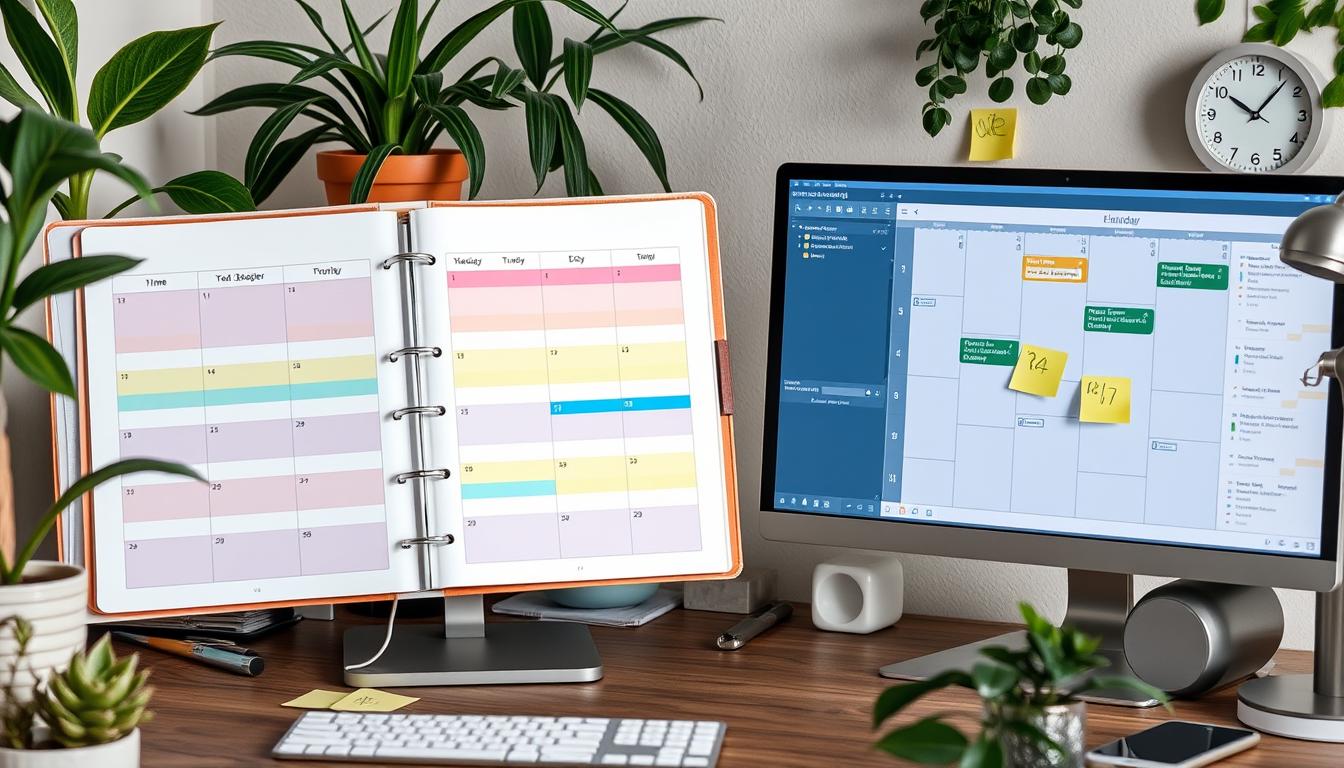
Regular reviews help spot areas for betterment and let you tweak your time management plans. This might mean checking your progress, finding out what’s hard, and coming up with new ways to tackle these issues. By being proactive with time management, you can stay on track, stay motivated, and get your goals faster.
Some important ways to review and adjust your time management strategies include:
- Setting clear, reachable goals
- Using calendars, to-do lists, and project management tools to stay organized
- Sorting tasks by how important and urgent they are
- Passing on tasks to others when you can
- Regularly checking and adjusting your schedule to keep it realistic and doable
By using these methods in your time management, you can work better, feel less stressed, and have a better balance between work and life. Always be open to changing your strategies as needed to make the most of your time.
Learning from Time Management Mistakes
Looking back, I see that learning from mistakes is key to success. By understanding common time management errors like procrastination and poor prioritization, I can find ways to do better. This helps me develop strategies to manage my time more effectively.
One big lesson I’ve learned is to turn mistakes into chances to learn. By thinking about what went wrong and making changes, I can work smarter and reach my goals faster. For example, breaking tasks into smaller parts and using the Pomodoro Technique helps me stay on track and avoid getting overwhelmed.
Some strategies that have helped me include:
- Prioritizing tasks based on their urgency and importance
- Using visual reminders, such as color-coded calendars or sticky notes, to stay organized
- Taking scheduled breaks to recharge and reduce stress
By using these strategies and learning from my mistakes, I’ve boosted my productivity and found a better balance between work and life. I hope my story encourages others to find their own ways to manage time well and reach their goals.
Developing a Time Management Routine
To succeed in time management, you need a consistent routine. This routine should become as natural as breathing. It helps you manage tasks, set priorities, and boost productivity. A good routine keeps you focused, stops procrastination, and balances work and life.
Key parts of a good routine include prioritizing tasks, using time blocking, and taking care of yourself. First, list your most critical tasks and schedule them early. Use tools like the Eisenhower Matrix to sort tasks by importance and urgency. Then, set times for focused work, breaks, and personal activities to keep your schedule balanced.
To stay on track, use reminders, avoid distractions, and celebrate your wins. Regularly check and tweak your routine to fit changes in work or life. Remember, sticking to your routine every day is crucial.
Creating a lasting time management routine boosts your productivity, lowers stress, and gives you control over your day. Embrace a structured routine and see how productivity hacks and time blocking techniques change your life at work and home.
FAQ
What are the benefits of effective time management?
Good time management boosts productivity and reduces stress. It also helps balance work and personal life.
What are the common time management challenges?
Challenges include procrastination and distractions. These can slow down progress.
How can setting SMART goals improve productivity?
SMART goals help plan and prioritize tasks. They guide you to achieve your goals.
What are some effective planning techniques for time management?
Daily and weekly planning helps stay organized. Tools like to-do lists and schedules are useful.
How can the Eisenhower Matrix and ABCD Method help with prioritization?
These tools sort tasks by urgency and importance. They help focus on what’s most critical.
What strategies can help overcome procrastination?
Break tasks into smaller steps and set deadlines. The Pomodoro Technique can also help.
How can technology help with time management?
Technology keeps you organized and focused. It’s a powerful tool for managing time.
What are some tips for maintaining a healthy work-life balance?
Set work boundaries and enjoy downtime. Prioritize self-care to balance work and life.
Why is it important to review and adjust time management strategies?
Reviewing and adjusting strategies is key to success. It leads to continuous improvement.
How can learning from time management mistakes lead to success?
Use mistakes as learning chances. Adapt strategies to boost productivity and achieve goals.
What are the key elements of an effective time management routine?
Prioritize, block time, and take care of yourself. Consistency is crucial for a successful routine.
Related Posts
 Productivity & Success
Unlock Efficient Goal Attainment: Proven Techniques
Unlock the secrets to achieving your goals efficiently. My proven techniques can help you [main keyword] and reach success faster.
insighter
• Feb 2, 2025
• 12 min read
 Productivity & Success
Elevate Your Goals: Top Techniques for High Achievers
I'll show you the top goal-setting-techniques-for-high-achievers to skyrocket your success. Elevate your goals and unlock your true potential.
insighter
• Feb 2, 2025
• 10 min read